

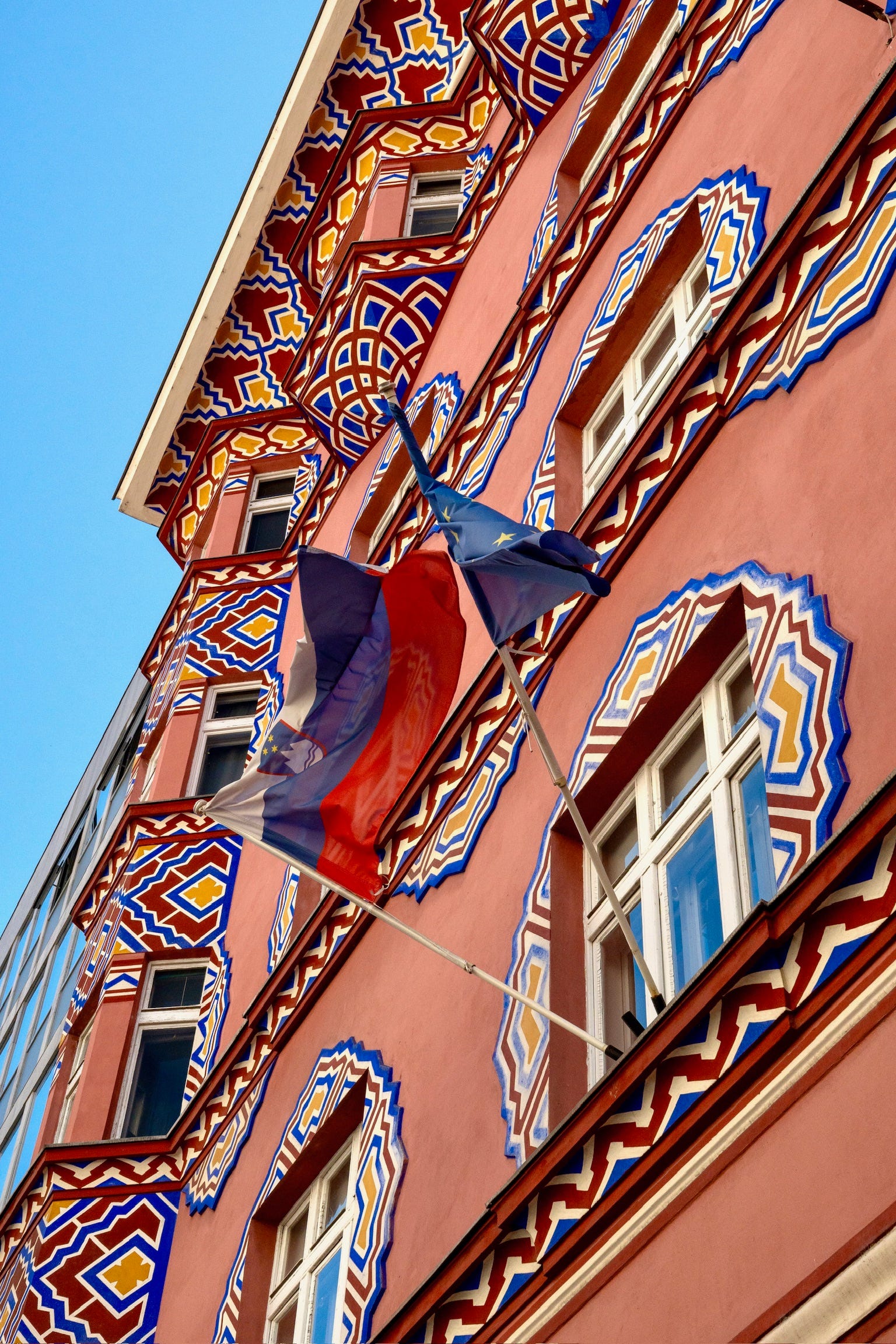
A journey is more than a sequence of places to visit. The way we move through a landscape, the time we give to a town, the people we encounter along the way, and even the place where we choose to stay can change how we experience a destination. Two travellers can visit the same places and come away with very different impressions, not necessarily because they saw different things, but because of how those places fitted into their journey.
I began thinking about this during my trip through Slovenia. I usually don’t do this kind of trip, full of hiking, lakes, forests, valleys, waterfalls and rivers. But going out of my comfort zone was the best choice. Thanks to that, I visited one of the most curious and gorgeous countries in Europe.
What stayed with me was not simply a collection of beautiful landscapes, charming towns or memorable experiences. It was the way certain moments connected. Looking back, these experiences also made me think about the decisions involved in designing a journey. What deserves our time? How can different places complement one another? When does a well-known attraction add something to the experience, and when is it worth leaving room for something less predictable?
There are no universal answers. Much depends on the destination, the travellers and what they hope to find.
But I believe a thoughtfully designed journey begins with a different question: not simply where should we go, but how can the places we visit come together to create a more meaningful experience?
These are some of the ideas I brought home from Slovenia.
Let the landscape set the rhythm
Some experiences make more sense when they are allowed to become part of the same day.
In Bohinj, we combined a mountain route through the Mostnica Gorge with an afternoon by Lake Bohinj. Not because they are two separate highlights, but because together they create a natural rhythm: walking, discovering, resting, eating and eventually enjoying the lake.
The route through Mostnica leads through forest and mountain scenery towards the Voje Valley, where the landscape opens into a wider valley, surrounded by mountains, with small houses and places to stop along the way.
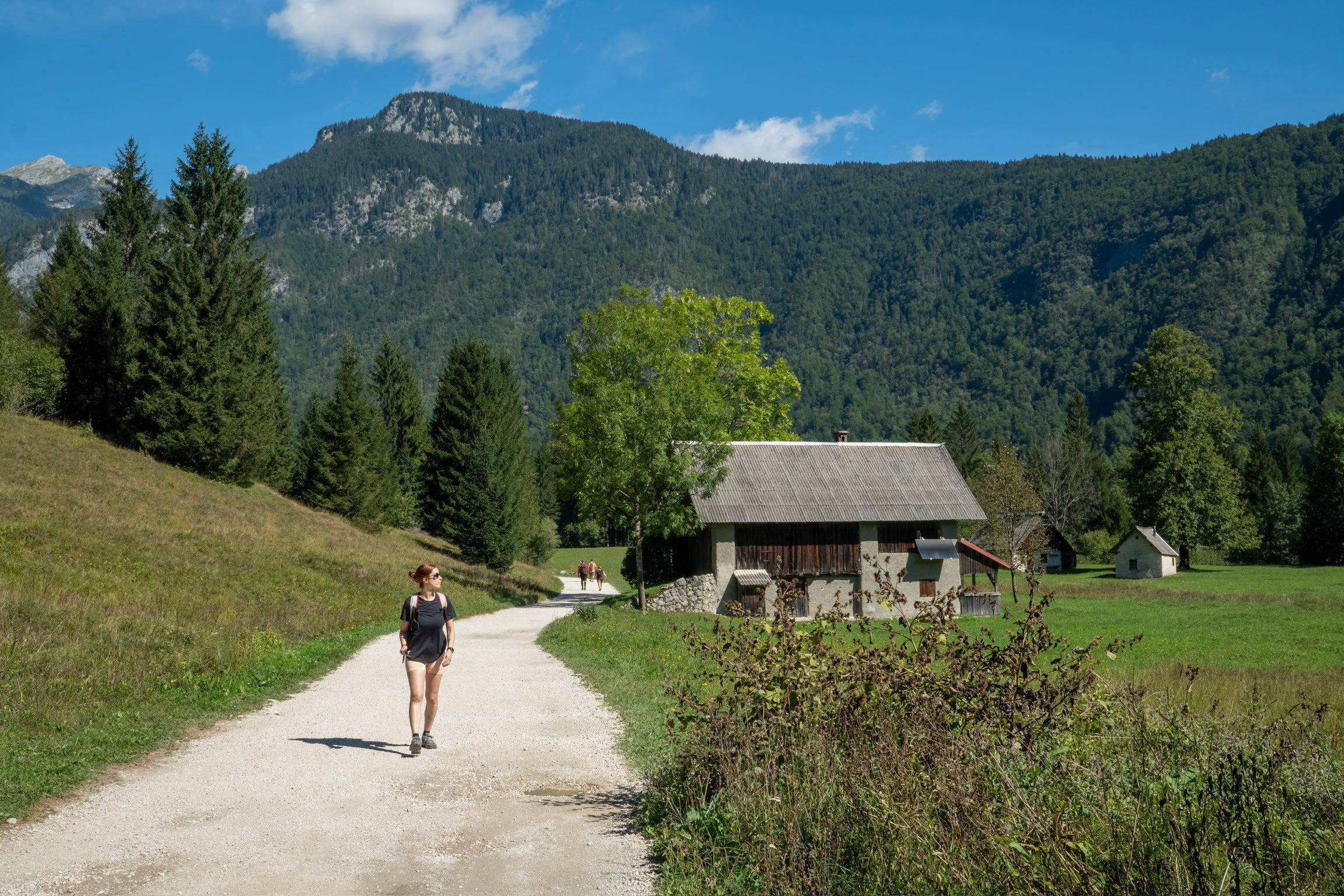
When we reached the waterfall, I ended up talking to a Dutch traveller I had met along the way. It was an entirely unplanned conversation; we didn’t give each other our names, but it became part of what I remember from the day.
And then we reached Lake Bohinj.
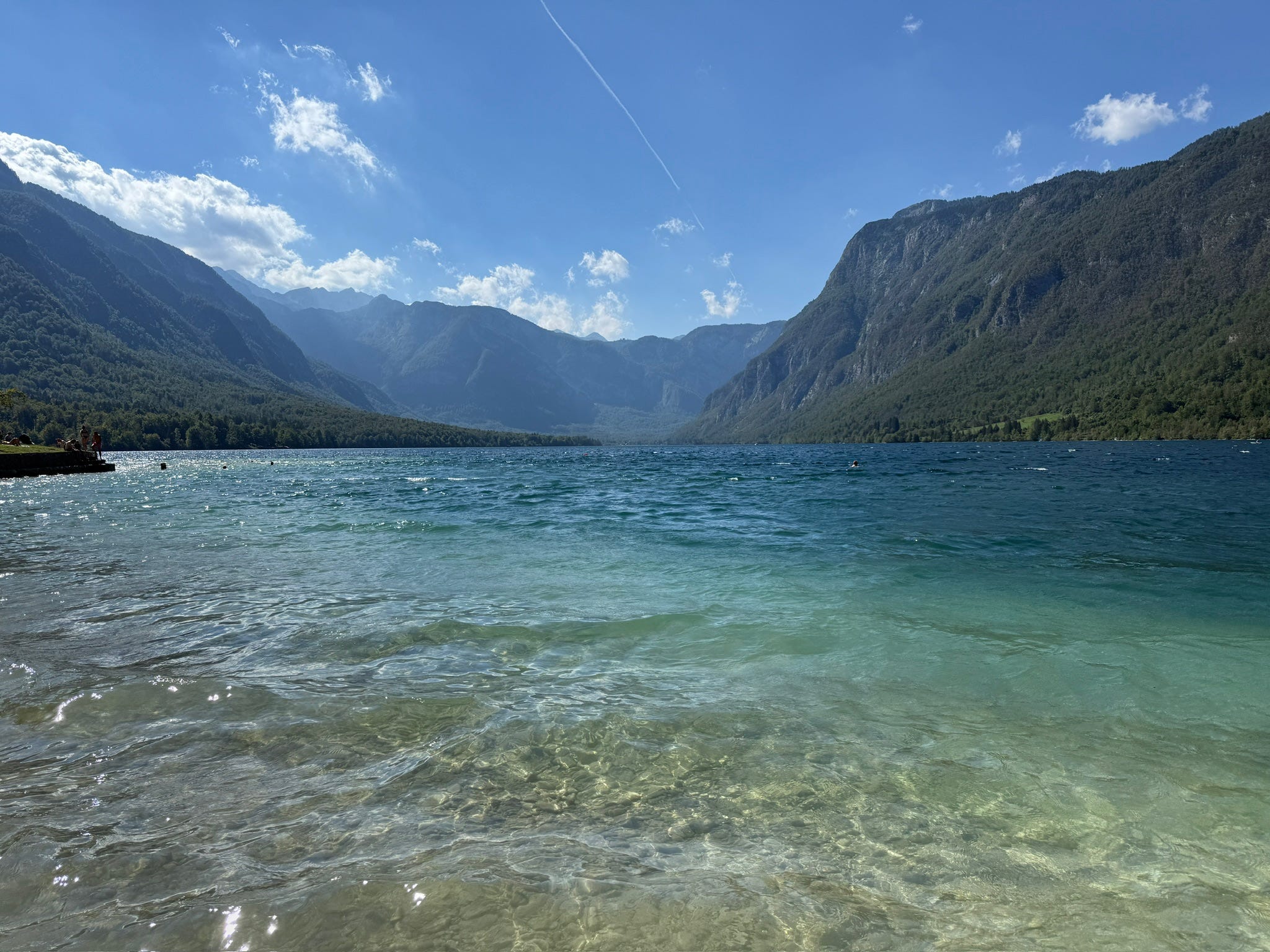
From the point where we returned to the car, the lake was already visible. After several hours of walking, going down to the water felt like the obvious choice. There was no need to add another attraction or hurry towards the next stop.
We could have lunch, swim, have an ice cream, and spend the afternoon by the water.
What interested me most, though, was watching how people used the lake. Families, friends and couples were spending the day there, not simply passing through it. The landscape was being used as part of everyday leisure: somewhere to meet, exercise, eat and slow down.
The route and the lake are not two separate stops on an itinerary. They become one experience, with the landscape itself determining the pace of the day.
And while the route can be chosen, the pace can be planned, and the places can be connected, some of the best moments cannot be designed. You can create the conditions for a journey to feel open to encounter. You cannot decide who you will meet along the way.
Let an experience open the place
A journey does not have to be made up of extraordinary experiences. Sometimes, an experience becomes meaningful because of everything that surrounds it.
Vipava was a good example of this.
After spending time in the mountains around Bohinj, arriving in the Vipava Valley felt like entering a different part of Slovenia. The landscape changed, the climate felt warmer, and the vineyards became present. The contrast was striking. It reminded me that travelling through a country is also about watching how the landscape changes as you move through it.
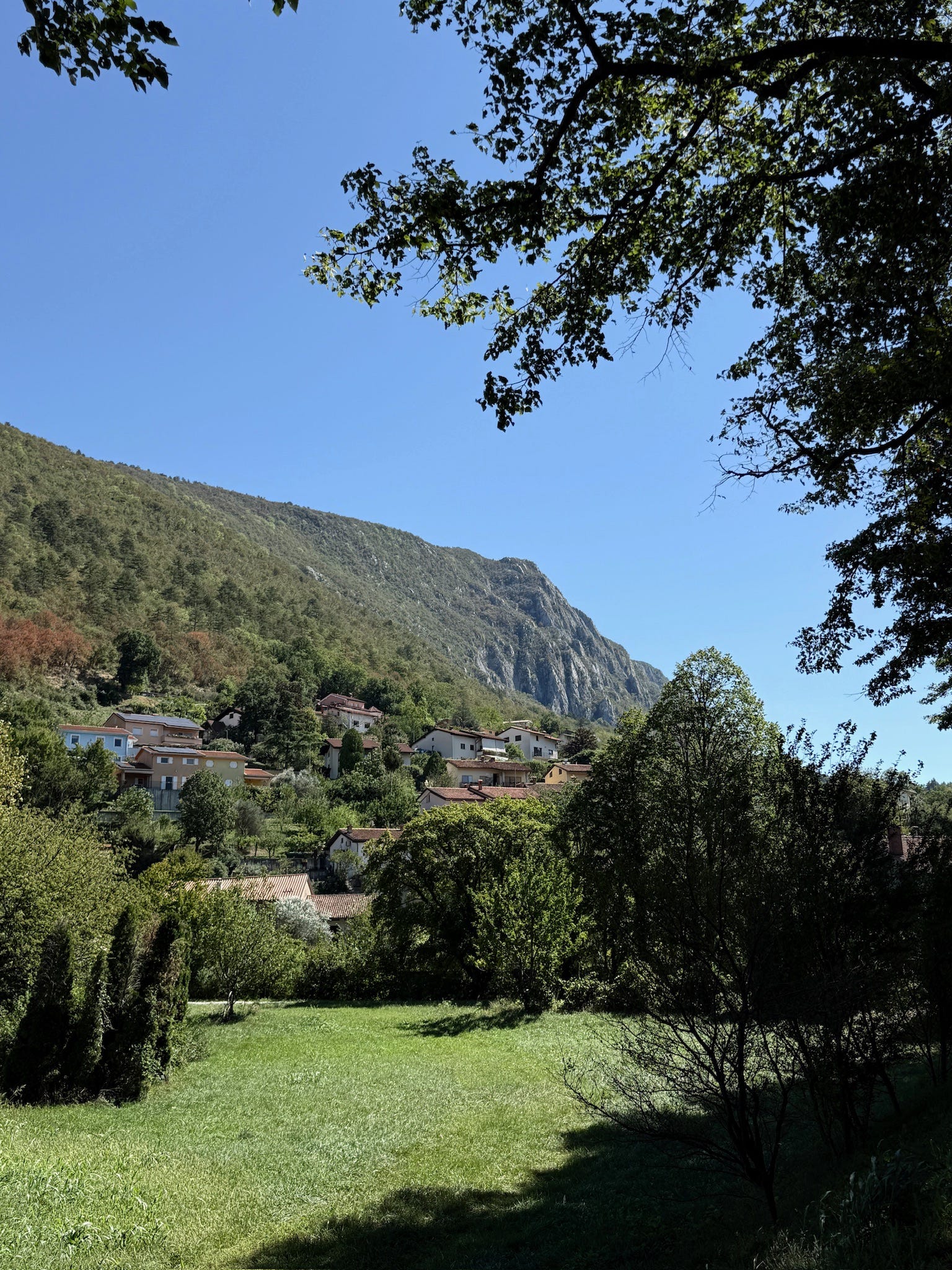
We stopped in Vipava for a walk and lunch before heading to a small local winery. We came across a local race. We had not planned to be there for it, but suddenly we found ourselves standing among people cheering as runners crossed the finish line before continuing with our day.
On our way to the tasting, something completely unexpected happened. A woman used grapes from the vines nearby. She came with a smile and with only a word in her English vocabulary: grapes. Later in the tasting, we found out she was the owner of one of the vineyards.
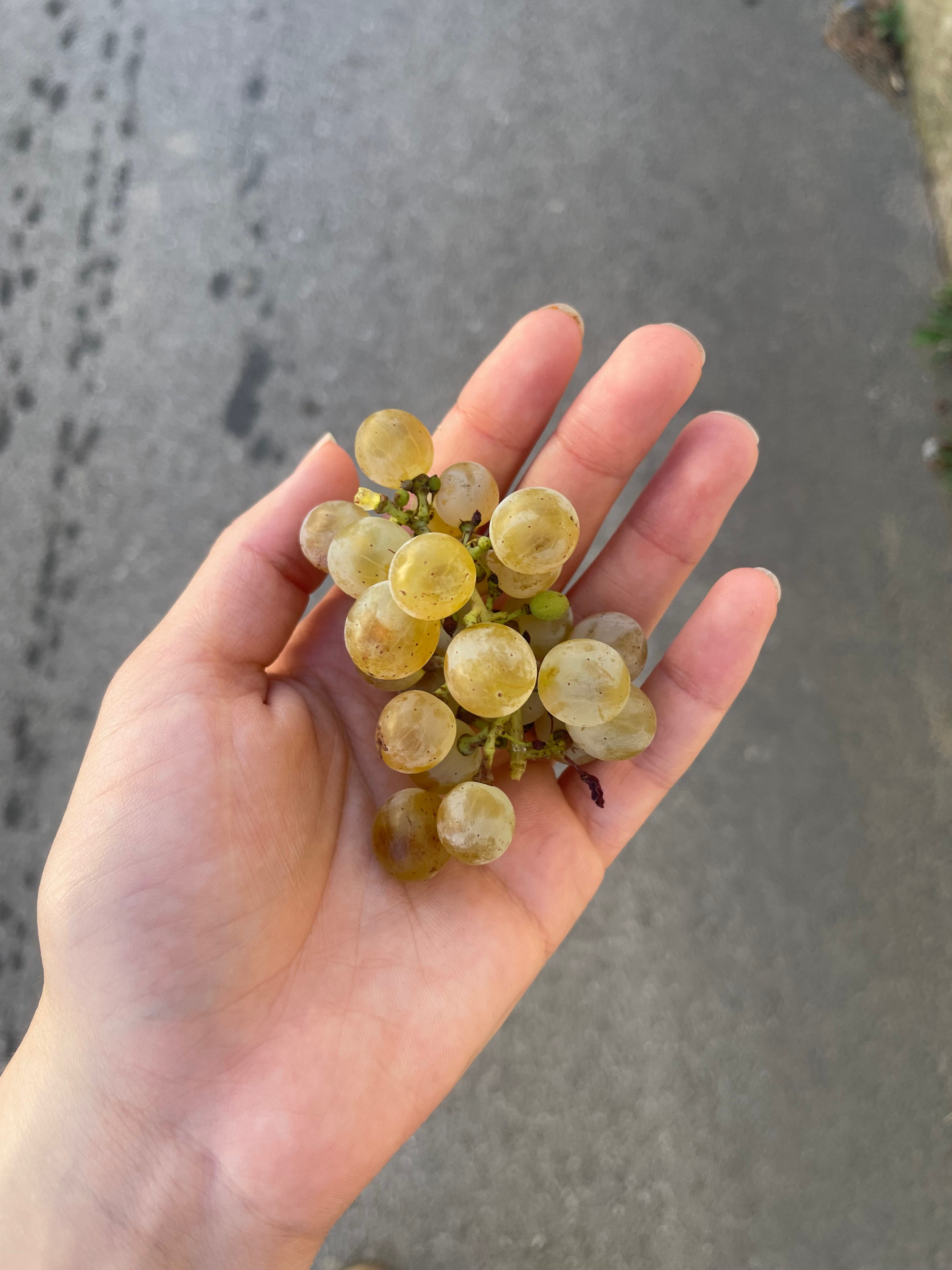
Regarding the tasting, the wine itself was not the most remarkable I have ever tasted. But the experience became much more interesting through the story around it.
The young man who guided the tasting told us about the family behind the winery, which has been passed down through generations, and explained how the different wines were made. When we wanted to try another wine, he was happy to pour it. When someone asked to taste the local brandy, he brought it out without hesitation.
The experience was not particularly elaborate. It felt personal. We can choose a small winery rather than simply adding a wine tasting to an itinerary. We can look for people who are willing to tell the story behind what they do. We can create opportunities for travellers to meet the people connected to a place. But we cannot design the conversation that follows, or decide who will step outside and offer you a handful of grapes. Those moments belong to the journey itself.
At the end, cultural travel is not a collection of “authentic experiences”, but a way of creating the conditions for a traveller to encounter a place through its landscape, food, people and everyday life.
Not everything famous has to be avoided
There is a tendency in travel to treat popular places in one of two ways: either they are essential, or they are places to avoid.
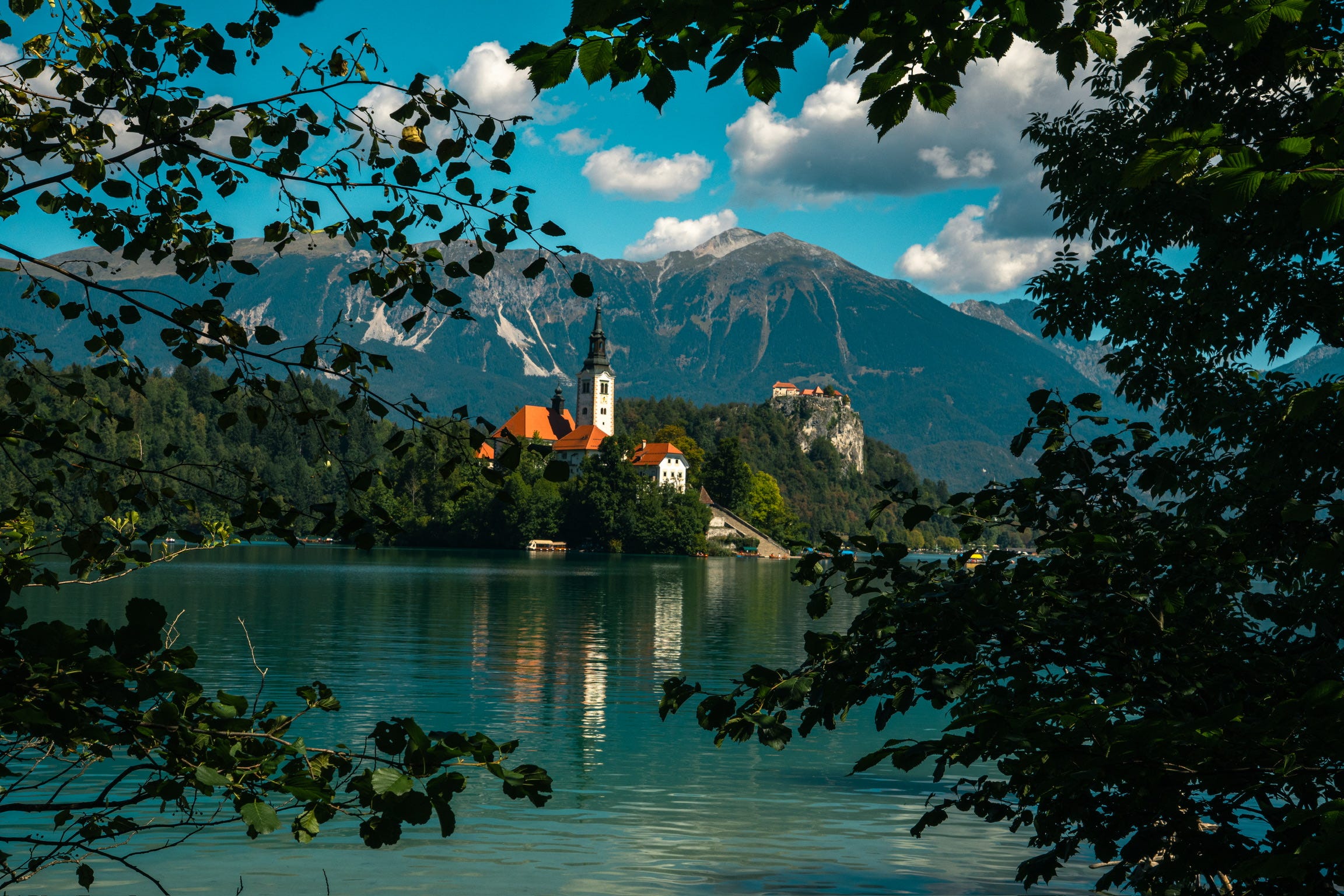
I don’t think it has to be that simple. For me, Bled still makes sense as part of a first journey through Slovenia. But including it does not mean that the whole experience has to revolve around the most obvious version of Bled.
During my trip, we used Bled more as a base and a point within a wider journey that had a different main destination. We stayed in a small, family-run house in a village nearby and spent only a few hours exploring the town itself.
On our first day, we went up to a viewpoint - but not the one everyone heads towards, but a higher point overlooking the lake - before continuing to Vintgar Gorge.
The following day, we walked around Bled, stopped for cocktails and considered taking the traditional boat out to the island. We didn’t have enough time in the end, so we went to play mini golf -the most ancient one in Bled- that is part of a local business. And that was amazing.
We also didn’t go up to Bled Castle. It would have been interesting to see, but after everything else we had experienced around the lake and in the surrounding landscape, it did not feel necessary to add another stop simply because it was there.
This is something I think about when designing a journey: time is part of the itinerary too. A place can be worth visiting without every attraction within it being worth your time.
For some travellers, the castle might be exactly what makes the day memorable. For others, an extra hour by the lake, a longer lunch, a mountain route or quieter afternoon somewhere nearby might be more meaningful.
The point is not to avoid what is popular. It is to understand why it is there, what it adds to the journey, and what you are giving up by choosing it.
Bled can be part of a journey without becoming the whole journey. And sometimes, knowing when to move on is just as important as knowing where to stop.
Choose where you stay for what it can add
Where you stay can be part of how you experience a place.
During my trip through Slovenia, some of the most interesting accommodation experiences came from staying in places run by local people and located within small communities rather than separated from them.
There was something simple but meaningful about that choice. Our spending was going towards locally run businesses, while the accommodation itself placed us closer to everyday life: houses, small shops, cafés and restaurants used by the people who live there.
The owners also tended to take care of details in a very personal way. We were welcomed with things like a bottle of wine, coffee, or sweets - small gestures, but ones that made the stay feel more personal.
Near Bled, the owners of the apartment where we stayed were particularly helpful. They recommended places they thought were worth visiting away from the most touristic routes, and they even sold homemade honey made by a neighbour.
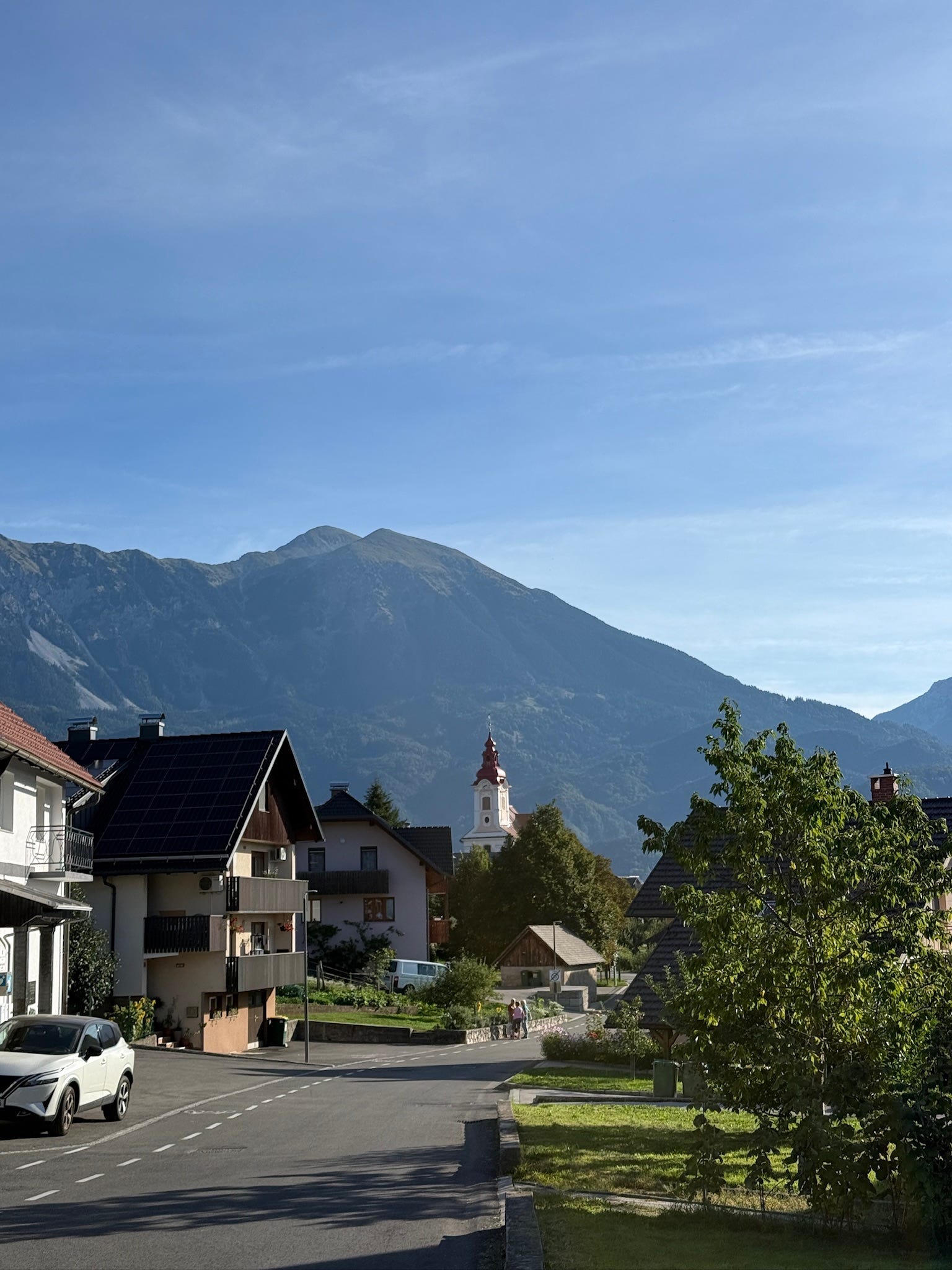
Our stay in Ljubljana, for example, was perfectly fine, but it did not create the same connection with the place. The difference was not simply the standard of the accommodation. It was the relationship around it.
Near Štanjel, this became even more apparent.
We stayed in a villa dating from 1835 that had been bought and restored by a couple. Many of the original elements had been preserved: doors, personal photographs, and other objects that belonged to the house. Some parts were still waiting to be restored. The house still felt like a place with a history rather than a perfectly finished backdrop. The owner herself welcomed us, showed us our room and explained how the villa had been built, what it had been used for before they bought it and how they had approached its restoration.
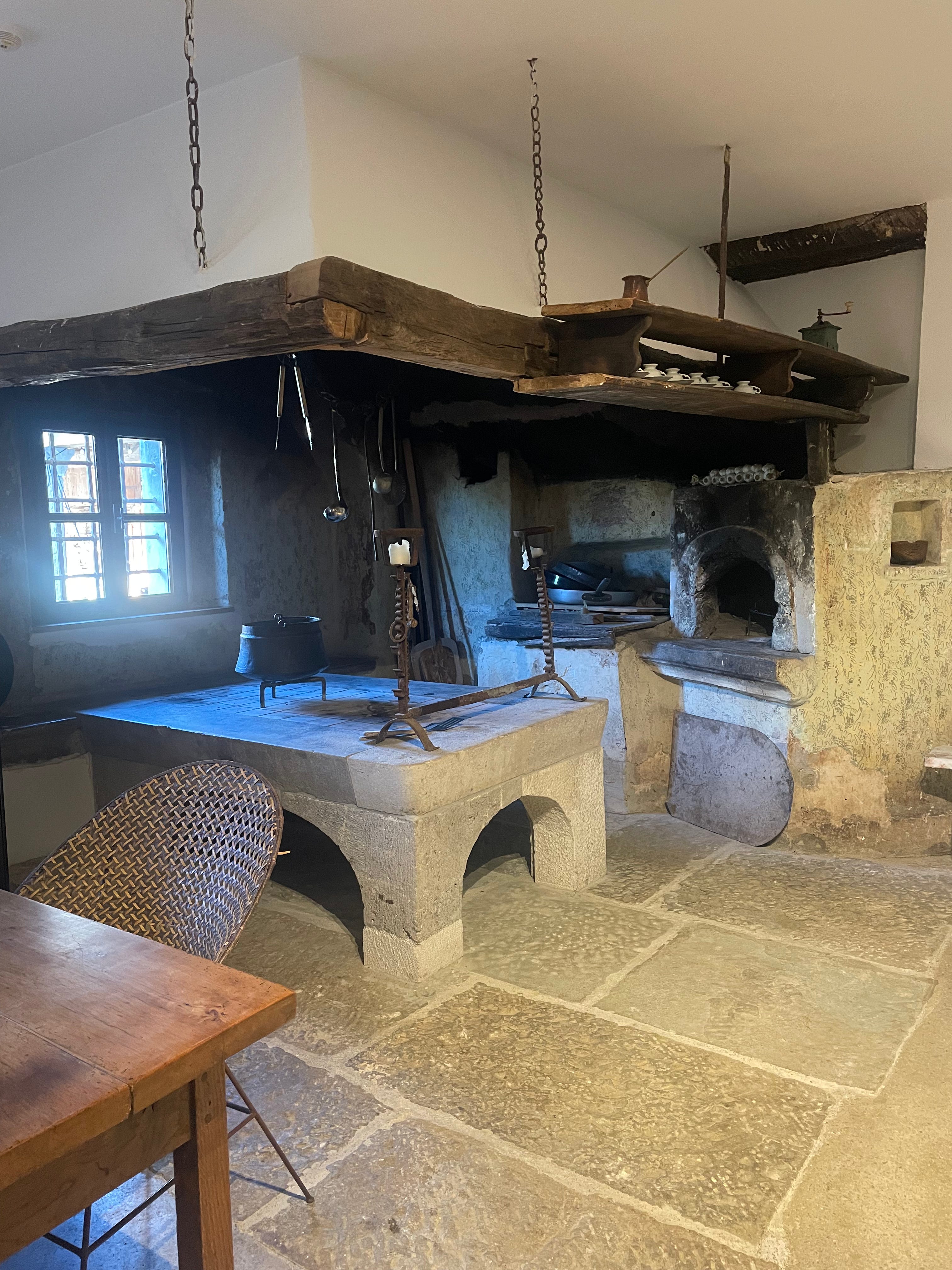
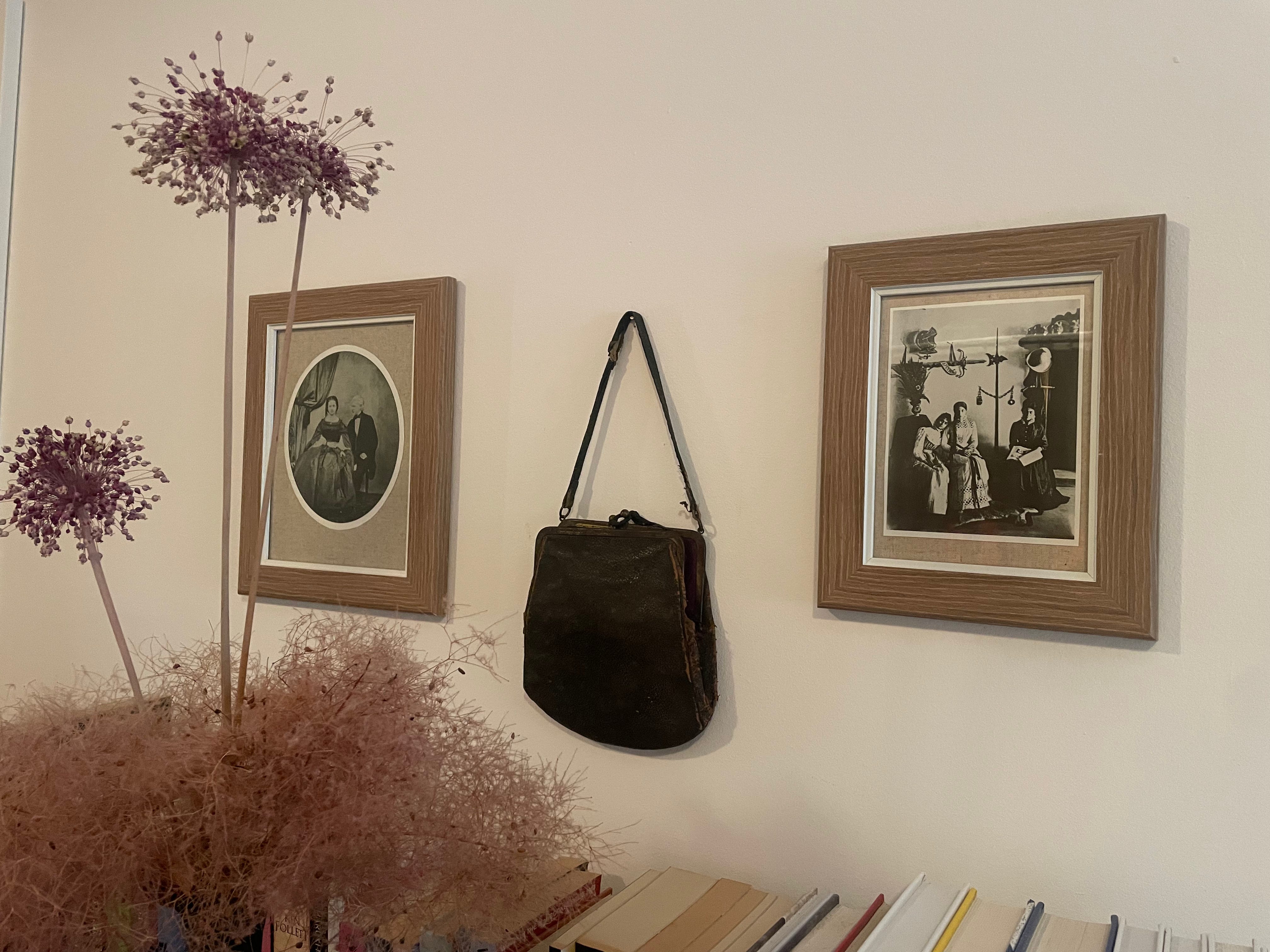
What stayed with me was not simply the building’s age. It was that its history was still present in the objects around us and that someone connected to the house was there to introduce us to it.
Accommodation is not only a practical decision about where to sleep. A recommendation from an owner can lead you somewhere you would never have found on your own, while a house with a history can become another way of understanding the people who have lived there.
Where you stay can change what becomes possible while you are there.
A local guesthouse can support the businesses around it. A recommendation from an owner can lead you somewhere you would never have found on your own. A house with a history can become another way of understanding the landscape and the people who have lived there.
The choice of accommodation is therefore part of the journey itself.
Not because local is always better, but because where you stay can change what becomes possible while you are there.
The journey changes with the traveller
But that does not mean I would design the same journey for everyone.
The same destination can become a very different journey depending on who is travelling.
When I design a journey, I want to understand more than someone’s list of interests. I want to know what kind of trips they are used to taking, what they are looking for this time, and what kind of experience they actually want to have.
Sometimes that means understanding the moment they are in.
Perhaps they have spent the last few months working constantly and need a journey that gives them space to disconnect. Perhaps they want to make the most of everyday and are happiest when there is always something to discover. Perhaps they want a mixture: an active morning, a good lunch and an unplanned afternoon with nowhere they need to be.
Those differences change the itinerary.
My own experience in Slovenia gave me plenty of ideas. After the trip, two places I would be curious to explore further for a future journey were Idrija and Škofja Loka. I would give more time to activities on the lakes. I might include the traditional boat to Bled Island, even though it is one of the more familiar experiences there.
But I would not automatically remove places simply because they did not resonate with me.
Tolmin Gorges, for example, did not feel essential to my own journey. But for someone particularly interested in hiking, geology or river landscapes, it might be exactly the kind of experience worth making time for.
The same applies to places such as Trieste or Ljubljana Castle. Whether they belong in a journey depends on what the traveller is looking for and what else the itinerary is trying to achieve.
It is about making decisions.
The destination provides the possibilities. The traveller determines which one matters.
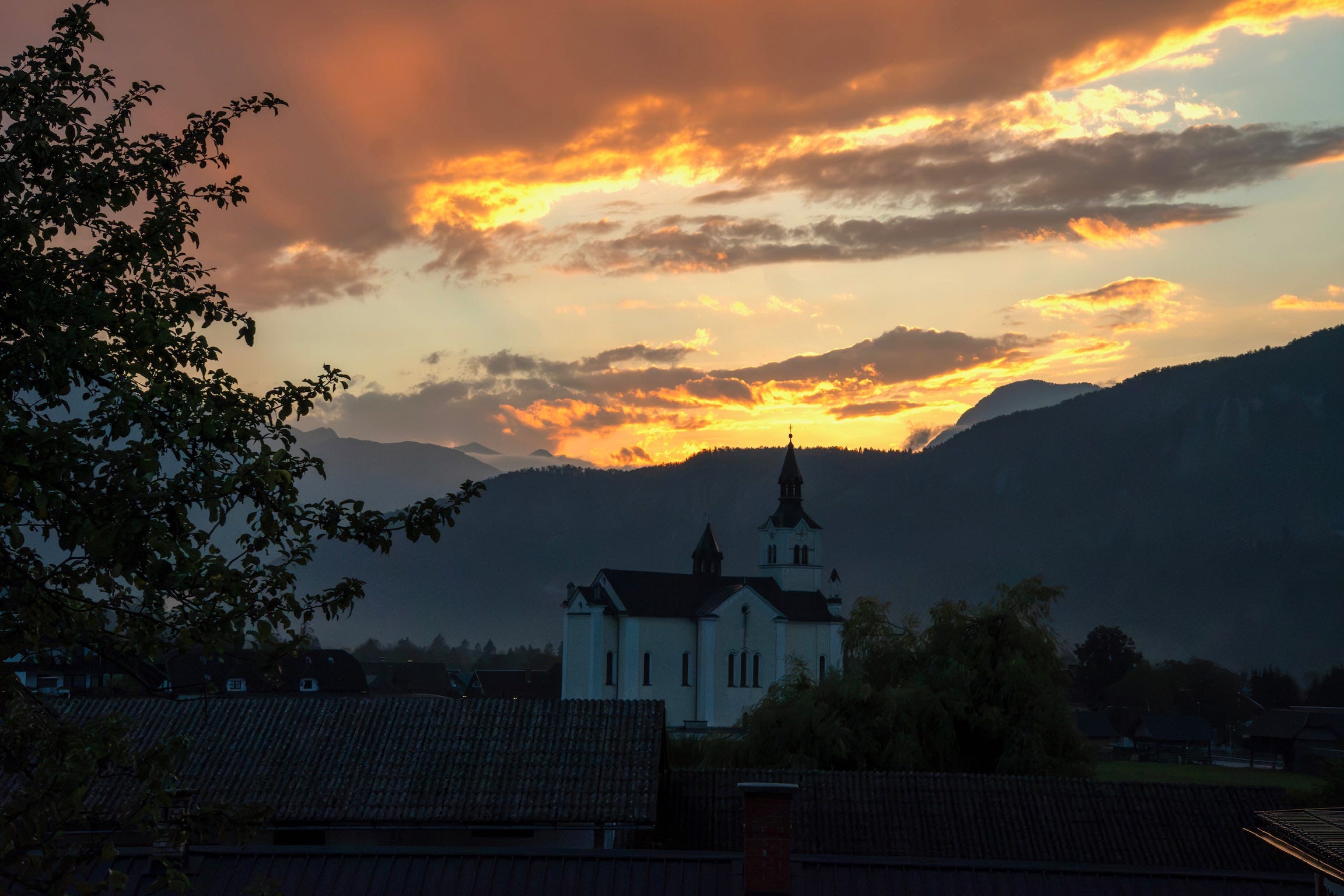
The idea I can take from this experience is that what makes a journey worthwhile is how well it responds to what we are looking for.
A destination can offer countless possibilities, but an itinerary inevitably involves choices. There is no single way to experience Slovenia, just as there is no single way to experience any place.
For me, this is what makes travel design interesting. It is not about finding the perfect itinerary, but about understanding the relationship between a place, the person travelling, and the time they have to discover it.